


Disclosure: This post contains affiliate links. If you buy through these links, Antifoodie may earn a commission at no extra cost to you.
Stand in front of a chef’s knife display at any kitchen store and you’ll see the same thing every time: a $25 knife sitting three feet from a $200 one, both claiming to do the exact same job. Nobody explains why one costs eight times more than the other, and the sales copy on both boxes uses the same words. “Precision.” “Professional grade.” “Built to last.”
I’ve bought knives at every price point on this list, used them for actual weeknight cooking (not staged photo sessions), and put them through the same test: onions, chicken breasts, a butternut squash, and two weeks of not being babied. The differences are real. They’re just not the differences the marketing implies.
So here’s the honest version: four knives, four price tiers, and what your money is actually buying at each one.

Quick Comparison: All 4 Tiers at a Glance
| Knife | Price | Best For | |
|---|---|---|---|
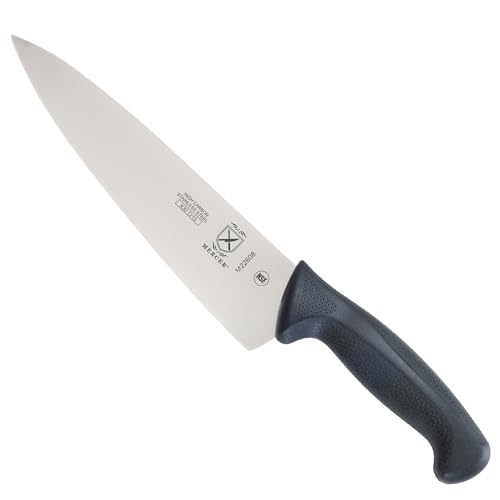
| Mercer Culinary Millennia | $29.00 | Renters, first apartments, backup knives | Amazon |
| Victorinox Fibrox Pro (Editor’s Pick) | $50.40 | Most home cooks, most of the time | Amazon |
| Global G-2 | $139.95 | Smaller hands, precision knife work | Amazon |
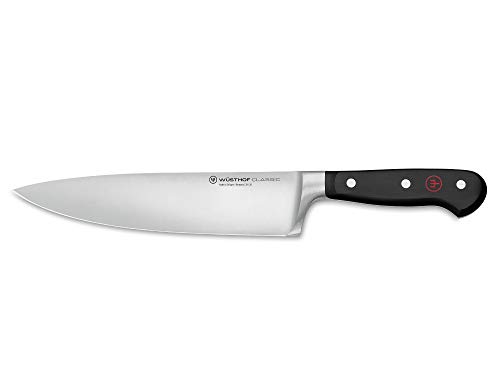
| Wusthof Classic | $170.00 | Daily cooks who want it to last decades | Amazon |

What the Extra Money Actually Buys You
Two things, mostly: steel and construction. Cheaper knives are stamped from sheet steel and softer alloys, forged knives like the Wusthof are hammered from a single steel billet and heat-treated to a higher hardness rating. That harder steel is measured on the Rockwell scale, and the jump from something like the Mercer’s mid-50s HRC to the Wusthof’s low-to-mid 50s (harder than it sounds thanks to a different alloy) is the entire reason one knife needs sharpening every other week and the other doesn’t, as Made In’s breakdown of the Rockwell hardness scale lays out clearly.
You’re also paying for balance and fit. A forged knife with a full bolster is built so the weight sits in your palm instead of out at the tip, which matters more the longer you’re standing at a cutting board. That’s a real, physical difference you feel in your wrist after twenty minutes of prep, not marketing language.
What It Doesn’t Buy You
A sharper knife out of the box. Every knife on this list ships reasonably sharp, and a $28 knife freshly honed will out-cut a $170 knife that’s gone six months without maintenance. Price buys how long the edge lasts and how the knife holds up over years, not how it performs on day one.
It also doesn’t buy you skill. If your knife skills are still developing, a nicer knife won’t fix uneven dicing or a bad rocking motion, and it’s genuinely easier to bruise yourself on an unfamiliar $170 knife than a Victorinox you already know how to handle. If you’re not sure your cookware or your knife skills are the bigger bottleneck in your cooking, the knife usually isn’t it.
Which Tier Is Right for You
If you cook a few times a week and don’t want to think about your knife again for years, the Victorinox is the move. It’s what I’d tell a friend to buy without a second conversation. If you cook almost daily and the idea of a knife that ages like a cast iron pan (see our Lodge cast iron review for the same logic applied to pans) appeals to you, the Wusthof earns its price over a long enough timeline. The Global is for a specific person: someone who already knows they like precision cuts and a lighter blade, not someone shopping by price alone. And the Mercer is a perfectly good tool for anyone who just needs a knife that works, not a knife that impresses anyone.
The Practical Move
Unless you already have a specific reason to spend more, start with the Victorinox. You can always upgrade once you know exactly what you wish it did differently.
Chef’s Knife Price FAQ
Does a more expensive chef’s knife actually cut better?
Fresh out of the box, not really. A cheap knife sharpened well beats an expensive knife that’s gone dull. The price difference shows up in how long that sharp edge lasts and how the knife holds up over years of use.
Is the Victorinox Fibrox Pro really as good as professional chefs say?
Yes, for the price it’s not close. It’s a staple in culinary schools and professional kitchens specifically because it performs like a much more expensive knife without the cost of replacing it if it gets lost or damaged on the job.
What’s the real difference between a stamped and a forged knife?
Stamped blades are cut from a flat sheet of steel, which is cheaper and lighter but generally softer and less durable. Forged blades are hammered from a single heated billet of steel, which typically makes them harder, more balanced, and longer lasting.
Do I need a knife with a full bolster?
Not for home cooking. A bolster adds weight and finger protection near the handle, which some cooks love and others find gets in the way of sharpening the full edge. It’s a preference, not a requirement.
How often should I sharpen a chef’s knife?
Hone it before most uses with a honing steel to realign the edge, and get it professionally sharpened or use a whetstone every two to six months depending on how often you cook. Softer, cheaper steels need it more often than harder forged blades.
Is it worth buying a full knife set instead of one good chef’s knife?
Almost never. Most home cooks use a chef’s knife, a paring knife, and maybe a serrated bread knife regularly. One good chef’s knife bought individually usually beats the chef’s knife that comes bundled in a twelve piece block set.
At the end of the day, the knife that gets used is the good knife. The $170 one sitting in a drawer because you’re scared to dull it isn’t doing anyone any favors.


