


Disclosure: This post contains affiliate links. If you buy through these links, Antifoodie may earn a commission at no extra cost to you.
Pie season starts the second the weather turns, and every year the same argument shows up in our kitchen. One of us wants to pull out the stand mixer because it is already sitting on the counter looking expensive. The other one wants the food processor because it takes nine seconds and does not care about your feelings.
So let’s settle it. If you are deciding between a food processor and a stand mixer for pie dough, this is a real fork in the road, because these two machines handle fat and flour in completely different ways. One of them is genuinely better at pie crust. The other one is better at almost everything else you would ever bake. And there is a third answer that costs seventeen dollars and annoys people who just spent five hundred.
We are not going to pretend both options are equally good and let you sort it out. That is what every brand blog does. Here is the actual verdict, then the reasoning, then the exceptions.
The Matchup
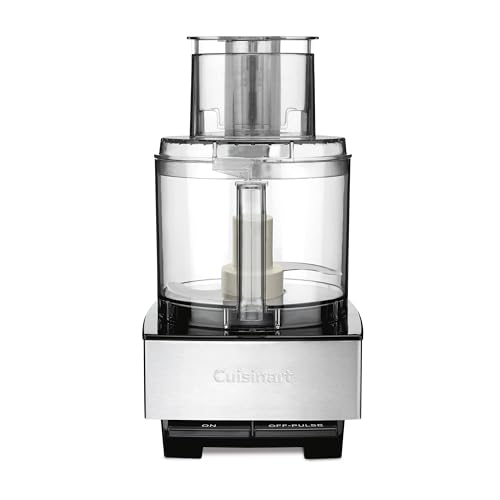

Head to Head on the Things That Actually Decide It
| What Matters | Cuisinart Food Processor | KitchenAid Stand Mixer |
|---|---|---|
| Crust texture | Flaky, visible butter layers | Tender and short, fewer layers |
| Time to cut in the fat | About 10 seconds | 1 to 2 minutes |
| Risk of overworking | Low if you pulse, high if you run it | Moderate, creeps up on you |
| Double-crust batch in one go | Yes, 14-cup bowl handles it | Yes, 5-quart bowl handles it |
| What else it does well | Slicing, shredding, hummus, pesto | Bread, cookies, meringue, frosting |
| Cleanup | Bowl, lid, blade, pusher | Bowl and paddle only |
| Price | $249.95 | $499.95 |
| Amazon | Amazon |
Where the Food Processor Wins
Speed is the headline, but consistency is the real prize. Pie dough by hand is a skill, and skills have bad days. The processor removes the variable. Eight pulses is eight pulses whether you are calm on a Sunday morning or panicking at 9 PM the night before Thanksgiving with three people asking where the foil is.
It also wins on temperature, which is the thing nobody talks about. Your hands run around 90 degrees. Butter starts softening in the low 60s. Every second your fingers are in that bowl you are working against yourself. The processor never gets warm because it is never running long enough to generate heat.
And it wins on the stuff next to pie. Biscuits, scones, shortcrust for a quiche, galette dough, streusel topping for an apple crisp. All of them are the same problem: cut cold fat into flour without melting it. If you are already going through the trouble of peeling a mountain of apples, and we have opinions about the tools for that, the last thing you want is to blow the crust.
Where the Stand Mixer Wins
Range, and it is not close. The Artisan does maybe fifteen jobs well. The food processor does four. If your kitchen has room for exactly one large appliance and you bake more than you pie, the mixer is the correct purchase and it is not a compromise.
It also wins on bulk. Doubling or tripling a crust recipe for a holiday is fine in a 5-quart mixer bowl and awkward in a processor, because the processor’s blade sits at the bottom and the top of a very full bowl does not get worked evenly.
And it wins on the part of pie that is not the crust. Meringue for a lemon meringue, whipped cream that holds overnight, a pastry cream that needs to be beaten smooth. The processor is useless at all three.
One more thing in the mixer’s favor: the pastry beater attachment exists specifically to fix the smearing problem, and it works reasonably well. It is an extra purchase on top of an already expensive machine, which tells you something, but it is a real option.
The Honest Answer for Most People
If you already own a stand mixer, do not buy a food processor just for pie. Freeze your butter for fifteen minutes, grate it on a box grater, chill the bowl, and mix on the lowest speed for under a minute. You will get a crust that is 90 percent of the way there for zero dollars.
If you own neither and you want one machine, buy the stand mixer. It is the better kitchen appliance even though it is the worse pie tool, and that is an honest trade.
If you own neither and pie is specifically the thing you care about, buy the Cuisinart. It is half the price of the Artisan and it is the correct tool for the job you described.
And if you want the answer that nobody selling appliances will give you: a pastry blender makes excellent pie crust and costs seventeen dollars.


The One Thing That Beats Both Machines
Measure your flour by weight. Not by cup. A cup of flour can vary by more than 20 percent depending on how you scoop it, and 20 percent more flour turns a good crust into a dry one no matter which machine mixed it. A decent digital scale costs under twenty dollars and fixes more crust problems than any appliance on this page.
That is not a dodge. It is the actual most common reason a pie crust comes out wrong, and it is upstream of this entire argument.
The Practical Move
If pie is the reason you are shopping, get the Cuisinart. It is half the price of the Artisan, it makes a flakier crust, and it is the right tool for biscuits and scones too. If you bake broadly, get the mixer instead and grate your butter frozen.
Pie Dough FAQ
Is a food processor or a stand mixer better for pie dough?
A food processor makes flakier pie crust because it cuts cold butter into flour in about ten seconds, leaving distinct butter pieces that turn into layers. A stand mixer’s flat paddle smears the butter instead, which gives you a tender crust rather than a flaky one.
Can you make pie dough in a KitchenAid stand mixer?
Yes, and it works fine if you freeze the butter first, chill the bowl, and mix on the lowest speed for under a minute. The pastry beater attachment helps noticeably if you plan to do it often.
What size food processor do you need for pie dough?
Ten cups handles a single or double crust comfortably. Fourteen cups is worth it if you regularly double a recipe or make multiple pies at once, since a crowded bowl does not mix evenly.
Why does my pie crust come out tough instead of flaky?
Usually too much flour or too much mixing. Weigh your flour instead of scooping it, and stop mixing while you can still see pea-sized chunks of butter.
Do you really need an appliance to make pie crust?
No. A pastry blender costs under twenty dollars and gives you more control over butter size than either machine, at the cost of about three minutes of arm work per crust.
Should you use butter or shortening in pie crust?
Butter tastes better and shortening is more forgiving because it has a higher melting point. A lot of people split the difference and use both, which is a reasonable answer if your kitchen runs warm.
The short version: buy the food processor if you are buying for pie, buy the mixer if you are buying for baking in general, and buy the pastry blender if you just want good crust this November without another box in the cabinet.


