⚠️ Disclosure: This post contains affiliate links. If you buy through these links, Antifoodie may earn a commission at no extra cost to you.
I have a jar of miso paste in my fridge that I use for approximately everything. Miso soup, obviously. But also salad dressings. Marinades. Butter for roasted vegetables. A spoonful stirred into ramen broth that started from a packet. The stuff is absurdly versatile, and if you’re not keeping a tub of it in your refrigerator right now, I genuinely feel bad for your weeknight dinners.
The problem is that the miso aisle — or the three-foot section of an ethnic grocery that passes for one — can be confusing. White or red? Japanese or domestic? 8 ounces or 35? And if you’re buying on Amazon, the options multiply fast. I’ve tested a bunch of them over the past couple of years and landed on a short list I actually keep coming back to. Here’s what’s worth your money.
Quick note: miso is a fermented soybean paste. White miso (shiro) is mild, slightly sweet, fermented for a shorter time. Red miso (aka) is more intense, saltier, fermented longer. Awase blends the two. All of them belong in your fridge. Let’s get into it.
⭐ Our Top Pick
Hikari Organic White Miso Paste — The One to Start With

Mild, clean, genuinely versatile — this is the jar you want in your fridge if you’re only buying one. Organic Japanese-made, no additives, and under $10 for 17.6 oz.
Quick Comparison: All 5 at a Glance
| Product |
Price |
Best For |
|
| ⭐ Hikari Organic White Miso |
~$9 |
All-around everyday cooking |
Amazon → |
| Hikari Organic Red Miso |
~$21 |
Deep umami: braises, glazes, soups |
Amazon → |
| Miso Master Organic White Miso |
~$17 |
USA-made, certified organic, gluten-free |
Amazon → |
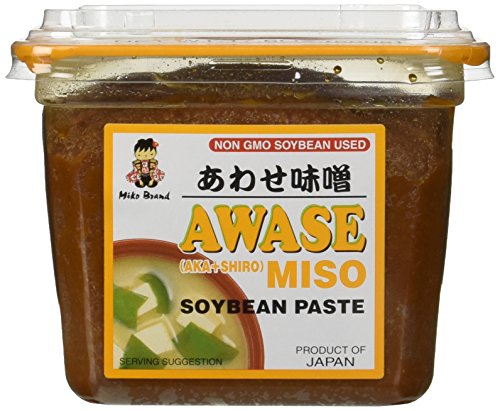
| Miko Awase Miso (White + Red Blend) |
~$9 |
Best value, everyday miso soup |
Amazon → |
| Marukome Organic Reduced Sodium (2-pack) |
~$10 |
Lower sodium, easy stock-up value |
Amazon → |
⭐ Editor’s Pick
Hikari Organic White Miso Paste: The One That Lives in My Fridge (~$9)
I’ve been through at least a dozen jars of this stuff. Hikari is a Japanese brand that’s been making miso since 1936, and their organic white miso is exactly what it should be: 100% organic rice and soybeans, no additives, no shortcuts. The flavor is mild and slightly sweet with just enough salt — the kind of miso you could eat by the spoonful if you were the sort of person who does that. (I am.)
At 17.6 ounces for under $10, it’s also a genuinely good deal. That’s a lot of miso. Enough for miso soup a few times a week, plus dressings, glazes, and the occasional batch of miso butter for roasted carrots that will make you feel like a much more competent cook than you actually are.
The texture is smooth and spreadable, which makes it easy to whisk into sauces without clumping. Some white misos can skew aggressively sweet or too salty — this one hits the middle ground that works in basically everything. It’s not the most complex miso you’ll ever taste, but complex isn’t always what you want when you’re putting it in a vinaigrette on a Tuesday night.
One thing worth knowing: Hikari is made in Japan and fermented traditionally, but it’s widely available on Amazon with solid delivery packaging. I’ve never gotten a broken lid or a compromised seal. The tub reseals well and it’ll keep in the fridge for months — though at this price, you’ll use it faster than you think.
Best for: Home cooks who want a single, all-purpose white miso that works for everything from soup to salad dressing to marinades. If you’re only buying one jar, this is it.
Usually $9–$11 • 17.6 oz, 4.6 stars, 750+ reviews
Hikari Organic Red Miso Paste: When You Need More Punch (~$21)
If the white miso is the everyday workhorse, red miso is the flavor bomb you pull out when you want something with actual depth. Hikari’s red miso is fermented longer than the white, which gives it that characteristic dark color, chunky texture, and deeply savory, almost funky flavor profile that makes your dishes taste like they’ve been cooking for six hours when they haven’t.
I use red miso specifically for braised short ribs, ramen broth building, miso-glazed salmon, and a ridiculous French onion soup upgrade where I stir a tablespoon into the broth and wonder why I didn’t do this sooner. The longer fermentation also means more complex amino acids — more umami punch per teaspoon than any white miso will give you.
It’s pricier than the white at around $21 for 17.6 ounces, but it’s also not something you blow through as fast. A tablespoon or two goes a long way in most recipes. If you’re the type of cook who already has white miso in the fridge and wants to level up, this is the natural next step.
Fair warning: red miso is salty and intense. Don’t try to substitute it 1:1 for white miso in delicate applications — you’ll overpower whatever you’re making. But in hearty, long-cooked, or aggressively seasoned dishes? It’s exactly right.
Best for: Cooks who want to expand their miso repertoire into braises, ramen, glazes, and any dish that benefits from deep, long-fermented umami intensity.
Usually $20–$23 • 17.6 oz, 4.5 stars • Use sparingly — it’s potent
Miso Master Organic Mellow White Miso: The American-Made Option (~$17)
Miso Master is made by the Great Eastern Sun company in North Carolina, which sounds like it has no business making miso but actually does it pretty well. Their Mellow White is certified organic, Non-GMO verified, vegan, Kosher, and gluten-free — which covers basically every dietary flag you might be shopping around. If you or someone you cook for has soy allergies, they also make a chickpea miso, but that’s a different product.
The flavor is genuinely mellow — sweeter and less salty than the Hikari white, with a lighter fermentation profile. It dissolves easily into soups and works great in dressings where you want umami without a big salt punch. I’ve used it to make miso-tahini sauce for grain bowls and it’s excellent. The sweetness is a feature, not a bug, if you know what you’re going for.
At $17 for 16 ounces, it’s a little pricier per ounce than the Hikari, but the “Made in USA” label matters to some people and the certifications are legit. It’s also worth noting that the tub seals well and the quality is consistent across batches — I’ve never opened one that tasted off.
Where it falls short: if you want traditional Japanese miso flavor, this isn’t it. The American fermentation process and shorter aging mean it tastes lighter and more straightforward than authentic Japanese-made miso. That’s not a flaw — it’s just a different product optimized for accessibility.
Best for: Shoppers who prioritize USA-made, certified organic products, or cooks who want a milder, sweeter white miso for dressings, grain bowls, and lighter sauces.
Usually $16–$18 • 16 oz, 4.5 stars • Gluten-free & Non-GMO verified
Miko Awase Miso (Aka + Shiro Blend): The Daily Driver (~$9)
Miko is one of the first Japanese miso brands to break into the American market, and their Awase — a blend of aka (red) and shiro (white) miso — is a smart starting point if you’re new to miso and want something that’s more interesting than white alone but not as intense as going full red.
Awase literally means “mixed” in Japanese, and the blend gives you a more complex flavor profile than either type alone: the mellow sweetness of white miso backed up by the deeper, saltier notes from the red. It’s what a lot of Japanese restaurants use for their house miso soup, and it works great straight out of the container with dashi, tofu, and scallions without any fiddling required.
At $9.49 for 500 grams (about 17.6 oz), it’s the same price point as the Hikari white but gives you that blend in a GMO-free package. The texture is smooth and it dissolves easily. My one critique: the tub lid isn’t the most secure I’ve dealt with — press it down firmly or transfer to a tub with a better seal if you’re the type of person who stores it at weird angles in the fridge. Which, same.
This is the miso I’d buy for a household where someone has never cooked with miso before. It’s approachable, flavorful, affordable, and versatile enough to cover most everyday uses without committing to the deeper end of the spectrum.
Best for: Miso beginners, daily miso soup cooks, and anyone who wants a balanced blend of white and red without buying two separate jars.
Usually $9–$11 • 500g (17.6 oz), 4.5 stars • GMO-free, Japanese-made
Marukome Organic Miso, Reduced Sodium (2-Pack): The Smart Stock-Up (~$10)
Marukome is one of Japan’s largest miso producers and they’ve been at it since 1854, which means they know something about fermentation. Their organic reduced-sodium version cuts the salt by about 25% compared to standard miso, which sounds like a health compromise but actually works well in practice — particularly if you’re cooking for people who are sodium-conscious or if you tend to season dishes aggressively and don’t want miso pushing you over the edge.
The two-pack format is where this one earns its place on the list. At roughly $10.48 for two 13.2-ounce containers, you’re paying about $5.25 a jar — which is exceptional value for organic, Japanese-made miso. Miso keeps in the fridge for a long time, so buying two at once isn’t a stretch. I keep one open and one sealed in the back of the fridge and that approach has served me well.
Flavor-wise, it’s solid but not exceptional. The reduced sodium takes the edge off in a way that makes it a bit softer and less umami-forward than a full-sodium paste. For miso soup, it works great and you can season the broth separately. For glazes and dressings where miso’s saltiness is part of the point, you may want to reach for one of the full-sodium options instead.
Where this shines: households with multiple cooks and different sodium needs, people who use miso in high volume and want to keep the pantry stocked without spending a lot, and anyone who’s been burned by a jar of regular miso making their dish way saltier than expected.
Best for: Sodium-conscious households, high-volume miso cooks who want to stock up on budget, or anyone who finds regular miso too salty for their cooking style.
Usually $10–$12 • 2 x 13.2 oz, 4.3 stars • Organic, reduced sodium, great pantry value
Which One Should You Actually Buy?
If you’re new to miso or just want one jar that handles everything: Hikari Organic White Miso. Under $10, widely available, genuinely good quality, and versatile enough that you’ll find uses for it every week. That’s my everyday fridge staple and it earns its place.
If you cook a lot of hearty dishes — braises, ramen, glazes, anything where you want deep background flavor — add a jar of the Hikari Red Miso to the rotation. Use it alongside white, not instead of it. If you want to skip the two-jar approach but still get some of that complexity, the Miko Awase blend is the smart move at the same $9 price point.
The Miso Master is for the cook who cares about domestic sourcing and certifications, or who wants a genuinely sweeter, milder miso for grain bowls and lighter dressings. And the Marukome 2-pack is for anyone who cooks with miso regularly and wants to keep the pantry stocked without overthinking it.
👋 The Practical Move
Start with Hikari Organic White Miso. Make miso soup once, use the rest in a dressing or a marinade, and you’ll understand immediately why miso belongs in every kitchen. It’s the highest-value flavor upgrade sitting in the specialty food aisle.
Start with Hikari White Miso →
Keep it in the fridge, use it often, and stop cooking without it.