⚠️ Disclosure: This post contains affiliate links. If you buy through these links, Antifoodie may earn a commission at no extra cost to you.
I’ve bought four different jars of gochujang in my life before I figured out what I actually wanted. The first one sat in my fridge door for a year because it tasted like spicy ketchup with a rice paste texture, and I kept reaching for sriracha instead. The second one was so thick I had to microwave a spoonful just to stir it into a marinade. Gochujang is not one thing — it’s a whole category with wildly different sweetness levels, heat, ferment funk, and ingredient lists, and the label rarely tells you which one you’re getting.
If you’re spending $8-$20 on a tub of red paste that’s going to live in your fridge for the next year, it’s worth knowing what you’re actually buying before you commit. I went back through the brands that show up on every “best gochujang” list, cross-referenced what people who actually cook with this stuff weekly say about them, and picked five that cover the real use cases: the one you should just buy if you’ve never had gochujang before, the one for people who read ingredient labels, the one for people who want to try it without committing to a giant tub, the small-batch option, and the one for when you don’t want to think about ratios at all.
None of these are bad. But they are not interchangeable, and picking the wrong one for what you’re actually going to cook is how gochujang jars end up as fridge clutter.
⭐ Our Top Pick
CJ Haechandle Gochujang — The One to Buy First

CJ is the biggest gochujang maker in Korea for a reason — this jar is the balanced, do-everything version that works in bibimbap, marinades, stews, and straight-up dipping sauce. It’s the one to grab if you’ve never bought gochujang before and don’t want to overthink it.
Quick Comparison: All 5 at a Glance
| Product |
Price |
Best For |
|
| ⭐ CJ Haechandle Gochujang |
See listing |
First-time buyers, all-purpose use |
Amazon → |
| Chung Jung One Gold (No Corn Syrup) |
See listing |
Reading the ingredient label first |
Amazon → |
| Sempio Gluten-Free Gochujang |
$8.62 |
Trying it out without committing to a huge tub |
Amazon → |
| Mother-in-Law’s Gochujang |
See listing |
Small-batch, funkier, US-made |
Amazon → |
| Ottogi Bibim Sauce |
See listing |
Skipping the ratio math entirely |
Amazon → |
⭐ Editor’s Pick
CJ Haechandle Gochujang: The No-Brainer Default
CJ has been making gochujang for over 40 years, and their Haechandle line is the one you’ll see referenced in nearly every “what does real gochujang taste like” comparison, because it’s the baseline everyone else gets measured against. It’s balanced — sweet, salty, savory, and spicy all show up, and none of them steamroll the others. That makes it forgiving: you can use it in a marinade, stir it into soup, or swipe it straight onto a rice cake and it works in all three contexts without needing to adjust anything.
The “Mild Spicy” version I’m pointing you to here is genuinely mild by Korean standards, which is exactly what you want if you’ve never cooked with gochujang before and don’t yet know your tolerance. It won’t set your mouth on fire, so you can actually taste what gochujang is supposed to taste like before you start adjusting up or down in future jars.
The one knock against it: it does list corn syrup on the ingredient label, which is standard for mass-market Korean condiments but will bother anyone specifically shopping to avoid it. If that’s you, skip to the Chung Jung One pick below.
Best for: Anyone buying their first jar of gochujang, or anyone who wants one all-purpose tub instead of five specialized ones.
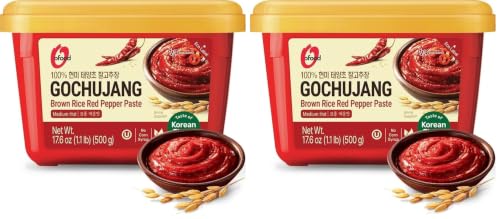
Chung Jung One O’Food Gold: For People Who Read the Back of the Jar
Chung Jung One is arguably the most recognized gochujang brand outside Korea at this point, and this “Gold” line is their answer to the “why does this ingredient list have corn syrup and maltodextrin in a fermented chile paste” question — it’s made without corn syrup, using rice and sun-dried chiles instead. You can taste the difference: it’s less candy-sweet than the mass-market versions and leans more into the fermented, slightly funky flavor that gochujang is supposed to have.
This is the jar for people who already know they like gochujang and are now optimizing for quality over convenience. It costs more per ounce than the basic CJ tub, and if you’re used to the sweeter mainstream version, this one will taste sharper and less approachable on the first bite. Give it a few uses before deciding — the fermented funk grows on you.
Best for: Cooks who already have a favorite gochujang and are trading up for cleaner ingredients and deeper ferment flavor.
Sempio Gluten-Free Gochujang: The Try-It-First Size
Most gochujang comes in jars sized for people who already know they’re going to use the whole thing — 1.1 pounds, 2.2 pounds, sometimes bigger. That’s a real commitment if you’re not sure you’ll like it or use it before it dries out in the back of your fridge. Sempio’s 8.8-ounce jar solves that: it’s small enough to actually finish, and Sempio tends to be slightly less sweet and a bit more fermented-tasting than CJ’s mainstream line, so it’s a decent second data point once you’ve tried the basic version.
It’s also one of the few widely available gluten-free options, which matters if you’re cooking for someone with a wheat sensitivity — a lot of gochujang uses wheat flour or barley malt as part of the fermentation base. The tradeoff for the small size is a higher per-ounce cost, so once you know you’re going to use gochujang regularly, it’s worth stepping up to a bigger jar of whatever you land on.
Best for: First-timers who don’t want to commit to a giant tub, and anyone who needs gluten-free.
Mother-in-Law’s Gochujang: The Small-Batch Option
Mother-in-Law’s is a Seattle-based company that got its start selling kimchi at farmers markets before expanding into gochujang, and it’s the outlier on this list — it’s made in the US in smaller batches rather than imported from Korea at scale. That shows up in the price (it costs noticeably more per ounce than the Korean imports) and in the flavor, which some tasters describe as sesame- and garlic-forward rather than deeply fermented and funky the way traditional Korean gochujang is.
It’s genuinely good, and it’s a solid option if you want to support a smaller American producer or if you can’t source Korean brands easily where you live. But if you’re chasing the specific fermented depth that makes traditional gochujang distinctive, know going in that this leans a little more toward a general-purpose spicy-sweet chile sauce than an aged, funky paste.
Best for: Cooks who want a US-made option or can’t easily find traditional Korean brands.
Ottogi Bibim Sauce: For When You Don’t Want to Do Math
This one’s a different animal from the other four — it’s not straight gochujang, it’s bibimjang, a pre-mixed bibimbap sauce that already has the sugar, vinegar, garlic, and sesame ratios worked out for you. If your entire reason for buying gochujang is to make bibimbap on a weeknight without pulling out four other bottles and guessing at proportions, this is the shortcut. Squeeze it on rice and vegetables, done.
The catch is that it’s a one-trick jar. It’s seasoned specifically for bibimbap, so it’s sweeter and thinner than straight gochujang and doesn’t work as a 1-for-1 substitute in marinades, stews, or anything that calls for actual gochujang as a base ingredient. Buy this alongside a real jar of gochujang, not instead of one, unless bibimbap is genuinely all you’re making with it.
Best for: Weeknight bibimbap without measuring anything.
Which One Should You Actually Buy?
If you’ve never bought gochujang before, start with the CJ Haechandle jar and nothing else — it’s the reference point every other brand gets compared to, and you need to know what “normal” tastes like before you go hunting for something different. If you already know you like it and you’re bothered by corn syrup on the label, move up to the Chung Jung One Gold. If you’re gluten-sensitive or just don’t want to commit to a jar the size of your forearm, grab the Sempio small jar. If you want to support a smaller US producer and don’t mind paying more for it, Mother-in-Law’s is a good jar. And if bibimbap on a Tuesday night is the entire mission, skip the paste altogether and grab the Ottogi bottle — just don’t expect it to double as your marinade base.
👋 The Practical Move
Buy the CJ Haechandle jar first. It’s cheap, it’s the flavor everything else gets measured against, and you’ll know within two meals whether you want to go looking for something sweeter, funkier, or cleaner.
Start with CJ Haechandle Gochujang →
One jar of gochujang will outlast most relationships. Pick the right one and it earns the fridge-door real estate.