⚠️ Disclosure: This post contains affiliate links. If you buy through these links, Antifoodie may earn a commission at no extra cost to you.
I used to baby my cast iron skillet like it was a rescue pet. Special soap rules, mandatory oil-down after every wash, wipe it immediately or it rusts, never let it sit in water, don’t even breathe wrong on it in the summer humidity. All of that for a pan that weighs approximately the same as a cinder block and heats about as evenly on my electric range.
Then I bought a carbon steel skillet. And honestly? I feel a little dumb for waiting so long. Carbon steel gives you basically the same high-heat searing ability, builds up natural nonstick seasoning the same way, lasts just as long — but it’s significantly lighter, heats faster, and responds to temperature changes in real time instead of just holding heat like a grudge. It’s what professional kitchens use, and once you understand why, you kind of wonder why cast iron got all the home cook hype.
The annoying part is that the carbon steel skillet market has a wide range of options — from $40 pre-seasoned pans that are ready to go right out of the box, to $160 French-made pieces that need some upfront TLC but will outlast your kitchen. I tested and researched through all of them. Here’s what’s actually worth your money in 2026.
⭐ Our Top Pick
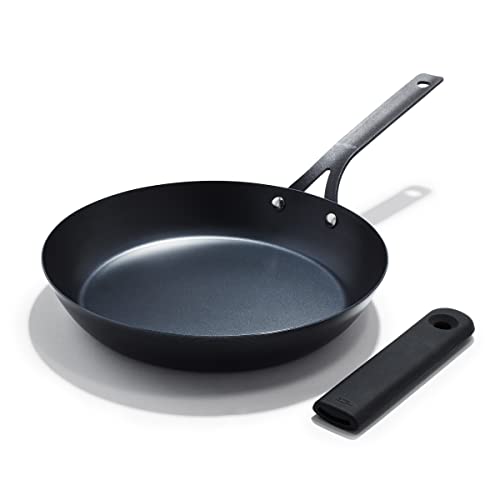
OXO Obsidian 12" Carbon Steel Skillet — Best for Most Home Cooks

Pre-seasoned, lighter than cast iron, and ready to cook real food the moment it comes out of the box — the OXO Obsidian delivers near-professional results without the upfront seasoning ritual that scares people away from carbon steel.
Quick Comparison: All 5 Carbon Steel Skillets at a Glance
| Product |
Price |
Best For |
|
| ⭐ OXO Obsidian 12" |
~$60 |
Most home cooks, beginners |
Amazon → |
| de Buyer Mineral B 11" |
~$65 |
Serious cooks, forever-pan buyers |
Amazon → |
| Mauviel M’Steel 12.6" |
~$160 |
Premium buyers, gift-worthy |
Amazon → |
| Merten & Storck 10" |
~$40 |
Budget buyers, first-timers |
Amazon → |
| YOSUKATA 11.8" |
~$45 |
High-heat, Asian-style cooking |
Amazon → |
Why Carbon Steel Is the Pan Professional Kitchens Actually Use
Walk into any serious restaurant kitchen and you’ll see carbon steel everywhere — not cast iron. The reason is simple: carbon steel is around 30–40% lighter than cast iron, heats up much faster, and is far more responsive. If you’re searing a steak and need to drop the temp quickly, carbon steel actually listens to you. Cast iron just keeps cooking at whatever temp it wants like a stubborn grandparent.
The tradeoff is that carbon steel requires seasoning — a thin layer of polymerized oil baked into the metal surface that creates natural nonstick properties over time. Some pans come pre-seasoned (meaning someone did the first few layers for you), and others come bare, coated in beeswax or food-grade rust protection that you have to wash off and then season yourself. Neither approach is bad; they just appeal to different people. If you want to cook dinner tonight, buy a pre-seasoned pan. If you want to do a kitchen ritual that makes you feel like a serious cook, buy a bare pan and season it yourself.
One thing to know going in: carbon steel is not going to be perfectly nonstick on day one the way a Teflon pan is. It gets better with every cook. After a few months of regular use — eggs, stir fries, seared chicken thighs — it’ll be slippery in a way that feels almost magical compared to where it started. That’s the whole point.
⭐ Editor’s Pick
OXO Obsidian Pre-Seasoned Carbon Steel 12": The One That Removes All Excuses (~$60)
The OXO Obsidian is the pan I’d hand to someone who’s been saying “I want to try carbon steel” for two years but keeps chickening out. It comes pre-seasoned, it cooks well right out of the box, and the removable silicone handle sleeve is one of those thoughtful design details that makes you wonder why every carbon steel pan doesn’t have it. You just squeeze it on when the handle is cold, and it acts as a built-in potholder so you’re not reaching for a kitchen towel every time you move the pan.
At around 3 pounds for the 12-inch, it’s noticeably lighter than a comparable cast iron, and it heats faster and more evenly than most carbon steel pans at this price point. Eggs slide around. Chicken skin crisps up. Steak gets a crust without sticking if you let it cook long enough before you start poking it. The pre-seasoning isn’t perfect from the factory — you might get some sticking in the first few cooks — but it builds up to a genuinely slick surface faster than I expected.
The weakness here is that the steel gauge is on the thinner side compared to the French options. It’s not going to crack or warp under normal home cooking conditions, but if you’re someone who wants to hand this down to your kids like a family heirloom, the de Buyer or Mauviel will age better. For everyone else — and especially anyone spending $60 on a carbon steel pan for the first time — the OXO Obsidian is the right call.
Best for: First-time carbon steel buyers and home cooks who want a versatile, everyday pan that doesn’t require an hour of prep before first use.
Usually $55–$65 · Also available in 8" and 10" · Ships with Prime
de Buyer Mineral B 11": The Forever Pan for Serious Home Cooks (~$65)
The de Buyer Mineral B is the pan that culinary school graduates and food nerds keep recommending, and they’re not wrong. Made in France from thick carbon steel, it’s heavier than most carbon steel options — closer to cast iron territory — and it arrives coated in beeswax rather than pre-seasoned. That means your first step is to scrub off the beeswax with hot water and soap (yes, soap, just this once), then season it yourself with thin layers of oil over heat. It’s a 30-minute process, and it feels like a ritual.
Once it’s broken in, it’s extraordinary. The thick steel holds heat almost as well as cast iron while still being more responsive. The riveted iron handle feels solid and serious. And the seasoning builds into one of the best natural nonstick surfaces I’ve cooked on — after a year of regular use, eggs would just slide around like they were on a freshly coated nonstick pan. There’s a reason professional kitchens keep these for a decade.
The honest downsides: the beeswax smell on the first couple of cooks is a bit much (open a window), it takes real time to build seasoning, and the heavier weight means it’s not as agile as the OXO. If you want something that cooks great on day one with no effort, this is not your pan. If you’re the type of person who enjoys the process of building a tool over time, the de Buyer will reward you like nothing else at this price.
Best for: Dedicated home cooks who want a pan that improves with every use and could genuinely last a lifetime.
Usually $60–$75 · Also available in 8", 9.5", 12.5", and 14" · Made in France
Mauviel M’Steel 12.6": The Best-Testing Pan in the Category (~$160)
Multiple serious publications — Reviewed, CNN Underscored, America’s Test Kitchen — point to the Mauviel M’Steel as the top performer among carbon steel skillets. And spending some time with it, it’s clear why. Mauviel makes it in France from thinner steel than de Buyer, which makes it lighter and significantly more responsive to temperature changes. When you turn the heat down, this pan actually listens right away instead of slowly radiating heat for another three minutes.
The 12.6-inch size is generous, the iron handle is beautifully finished (it will get hot — use a grip), and it browns food with a consistency I haven’t matched with cheaper pans. Like the de Buyer, it arrives bare and requires an initial seasoning session — scrub off the factory coating, do three or four thin oil layers over medium-high heat, let it cool between each. After that first session, it’s ready to go, and the seasoning builds remarkably fast.
At $160, you’re spending roughly 2–3x what you’d pay for the OXO or de Buyer. That’s real money. But this is also genuinely the best carbon steel skillet I’ve tested — the kind of kitchen investment that you make once and forget about because it never needs to be replaced. If you’re looking for a gift for someone who takes cooking seriously, or you want to treat yourself to something that’ll still be cooking steaks in 2045, the Mauviel M’Steel is the one.
Best for: Serious cooks ready to invest in a premium, heirloom-quality pan that delivers top-tier performance and builds nonstick seasoning fast.
Usually $150–$170 · Available in 7.9" through 14.2" · Made in France
Merten & Storck Pre-Seasoned Carbon Steel 10": The No-Risk Entry Point (~$40)
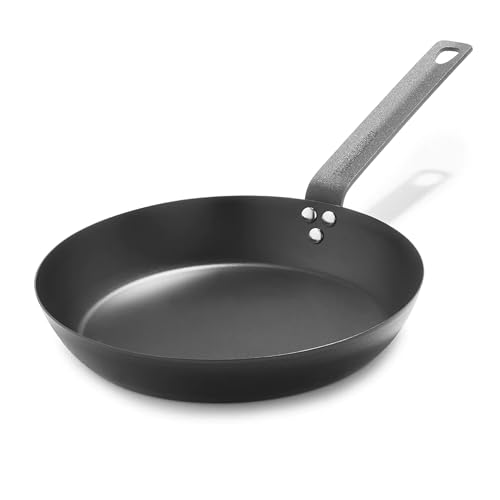
If your attitude toward new cookware is “I’ll believe it when I see it,” start here. Merten & Storck makes a pre-seasoned carbon steel skillet that costs around $40 and does exactly what it says it will. It comes ready to cook, the pre-seasoning is actually decent (better than a lot of bare pans after one seasoning session), and it’s light enough to toss and flip things without your wrist complaining.
It’s not the pan I’d recommend to someone who wants to be cooking on it in 20 years. The steel is thinner and lighter than the French options, and the pre-seasoning — while functional — isn’t going to build the same depth of natural nonstick over time. But for a first carbon steel pan, a college-budget kitchen upgrade, or a camping/outdoor cooking option, it’s hard to argue with the price-to-performance ratio. It sears chicken and vegetables beautifully, handles eggs reasonably well after a few weeks of use, and won’t make you feel bad about experimenting.
One note: like all pre-seasoned carbon steel, it’ll have some sticking in the early cooks, especially with eggs and fish. Don’t panic. Cook fatty foods in it for the first month and the seasoning will improve. Also note it’s a 10-inch, so it’s more of a one-to-two-person pan than a family-dinner workhorse.
Best for: Budget-conscious cooks testing carbon steel for the first time, or anyone who wants a lightweight, affordable everyday pan for smaller meals.
Usually $38–$45 · Also available in 8" and 12" · Ships with Prime
YOSUKATA Carbon Steel Frying Pan 11.8": Best for High-Heat, Wok-Style Cooking (~$45)
The YOSUKATA is a bit of an outlier in this list — it has a wok-style flared design and a removable wooden handle, which makes it more specialized than the others. But if you cook a lot of stir-fry, Asian-inspired dishes, or just love high-heat cooking where you’re moving ingredients around constantly, this pan is genuinely excellent for the price.
It’s coating-free and pre-seasoned using an oxidation treatment, meaning the dark surface you see is a natural oxide layer rather than factory oil. That actually builds a decent initial nonstick base, and the high, flared sides make tossing vegetables and proteins easy without food flying out of the pan. The wooden handle stays cool during stovetop cooking (unlike iron handles that will absolutely burn you if you forget), and because it’s removable, you can go oven-safe without worrying about it.
The drawback is that the wok shape isn’t ideal for everything. If you want to sear a steak and baste it with butter, or cook a skin-on chicken thigh flat against the surface, the sloped sides work against you compared to a straight-sided skillet. Use this pan for what it’s good at — hot, fast, high-energy cooking — and it’s a $45 win. Try to make it your everyday all-purpose pan and you might be disappointed.
Best for: Home cooks who do a lot of stir-fry, sautéing, or high-heat Asian-inspired cooking and want a lightweight pan that handles fast cooking exceptionally well.
Usually $40–$50 · Removable wooden handle included · Induction compatible
Which One Should You Actually Buy?
Here’s the honest version: for most home cooks reading this, the OXO Obsidian 12-inch is the right answer. It’s pre-seasoned, it performs well right away, it’s induction-compatible, and the silicone sleeve means you won’t grab the hot handle and curse yourself out. You’ll spend $60, cook on it for years, and it’ll keep getting better. If you already know you want a pan that improves over a decade-plus of use and you don’t mind doing an initial seasoning session, bump up to the de Buyer Mineral B — same price range, way more durability. If money isn’t the primary filter and you want the best-tested option on the market, the Mauviel M’Steel is genuinely worth the premium. On a tight budget? Merten & Storck at $40 is a legitimate entry point, not a compromise. And if stir-fry is your thing, the YOSUKATA earns its spot in the lineup.
👋 The Practical Move
Get the OXO Obsidian 12-inch. Pre-seasoned, ready to cook, and the removable silicone sleeve actually makes it fun to use. Cook everything greasy in it for the first month and it’ll build up a nonstick surface that’ll surprise you.
Get the OXO Obsidian →
Carbon steel isn’t a trend — it’s what kitchens that cook real food have been using for a long time. If cast iron is the analog camera, carbon steel is the rangefinder: lighter, faster, and frankly more fun to work with once you know what you’re doing.